
Last updated November 23, 2026
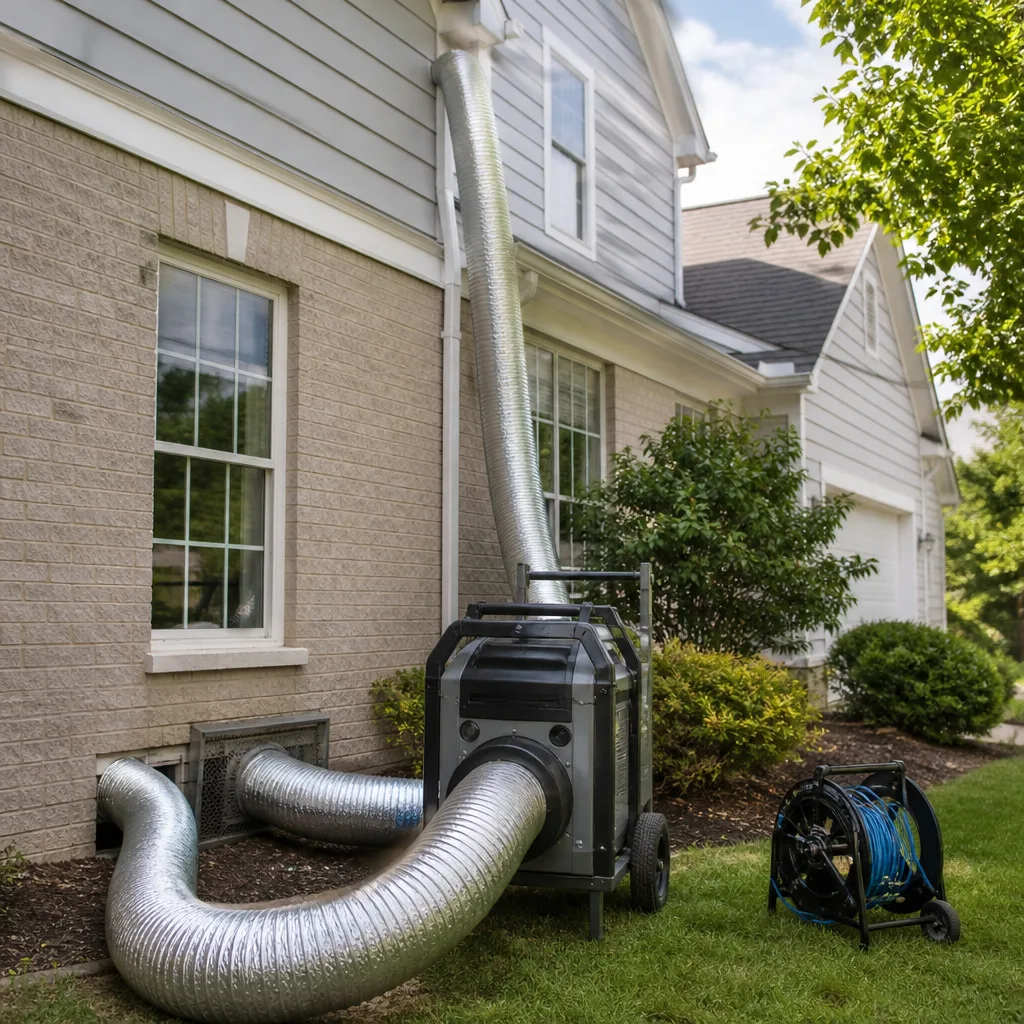 Whole-home duct cleaning
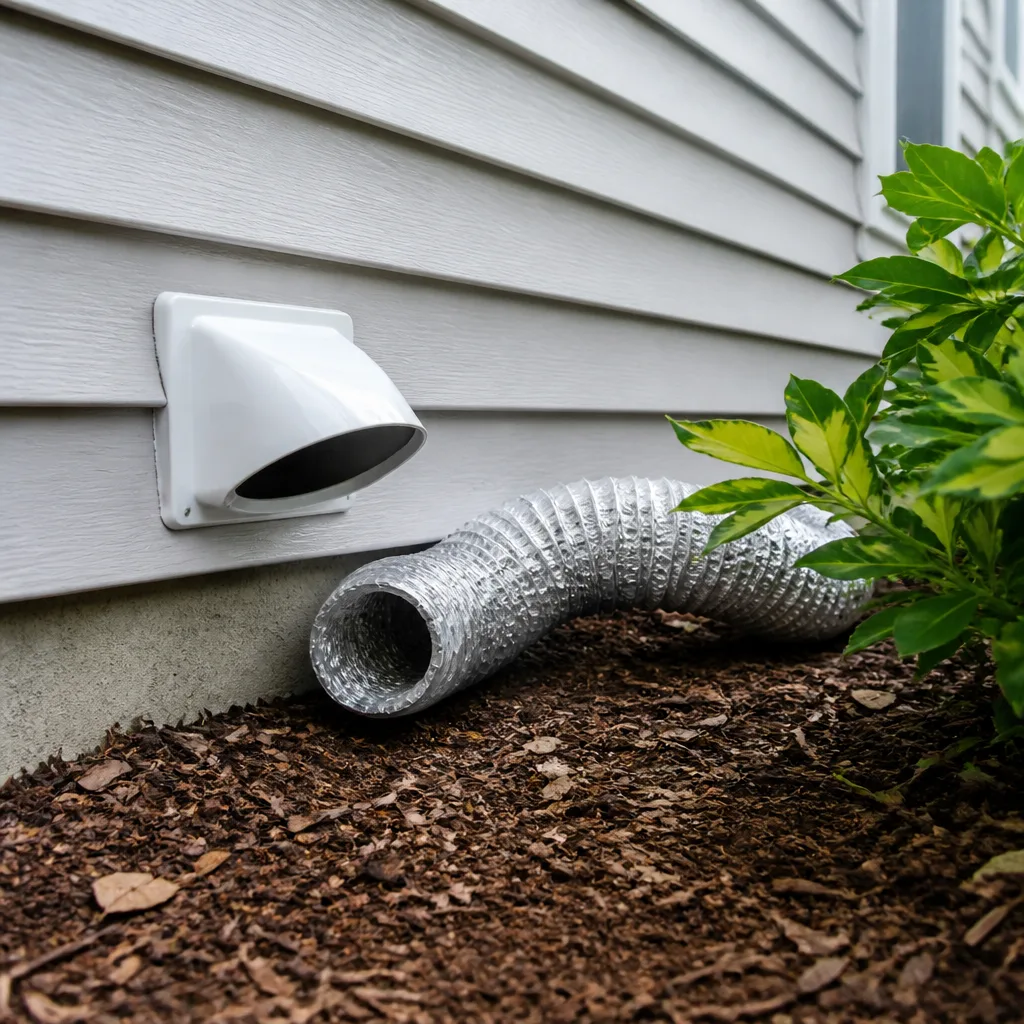 Dryer vent cleaning
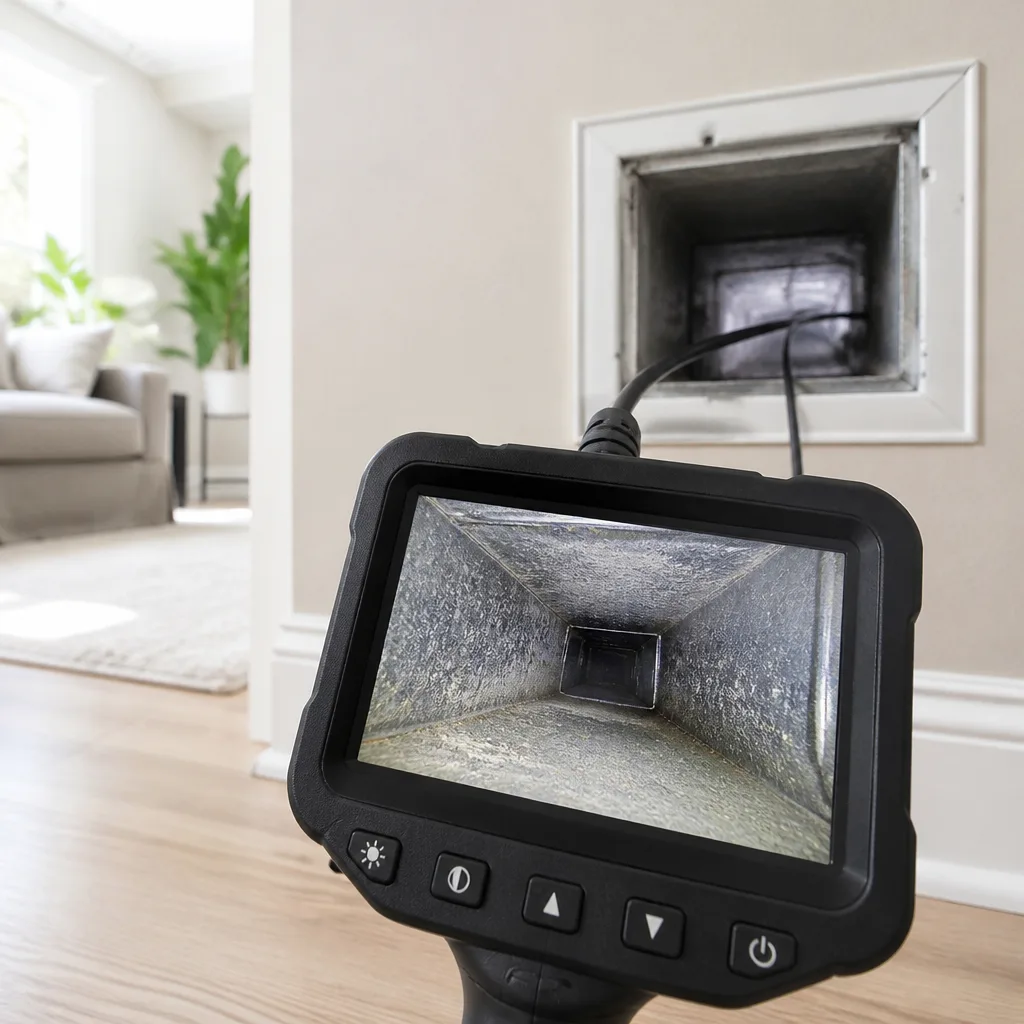 Camera inspection
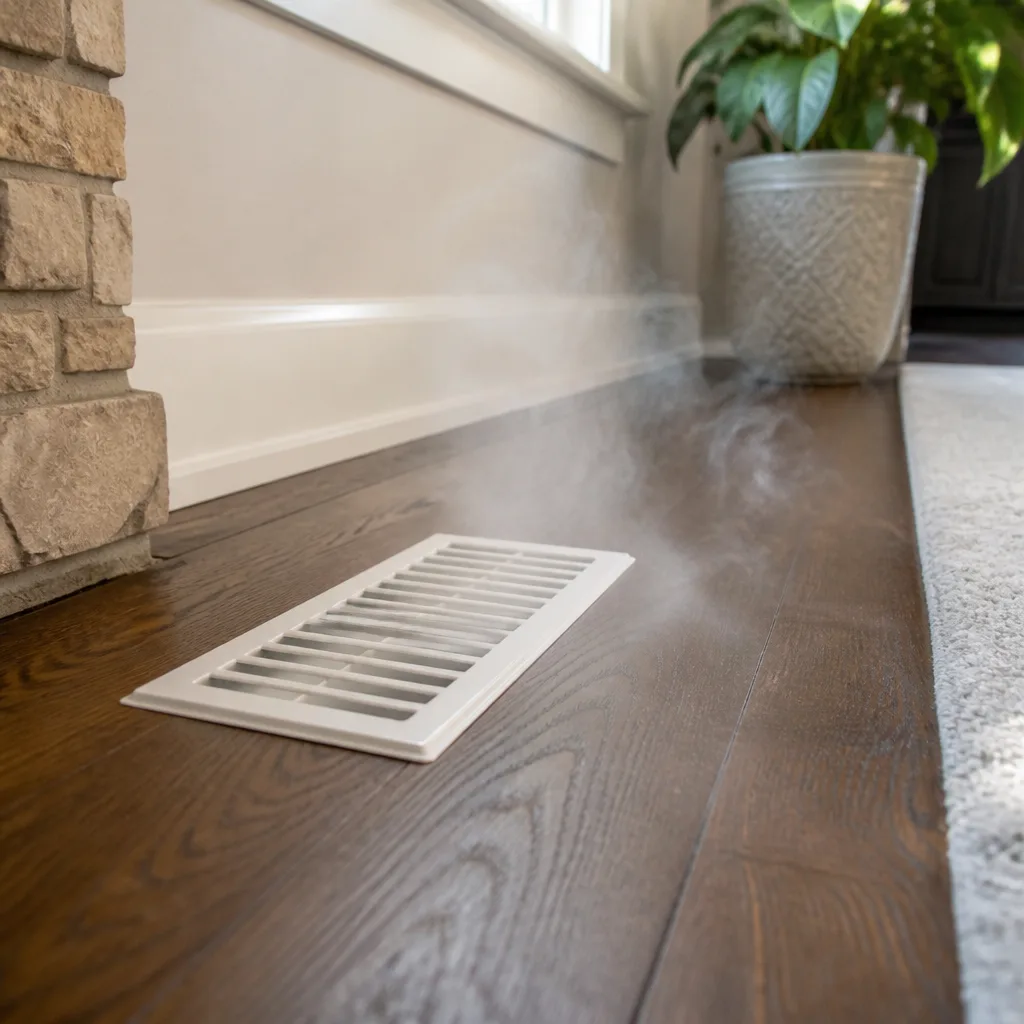 Sanitizing & deodorizing
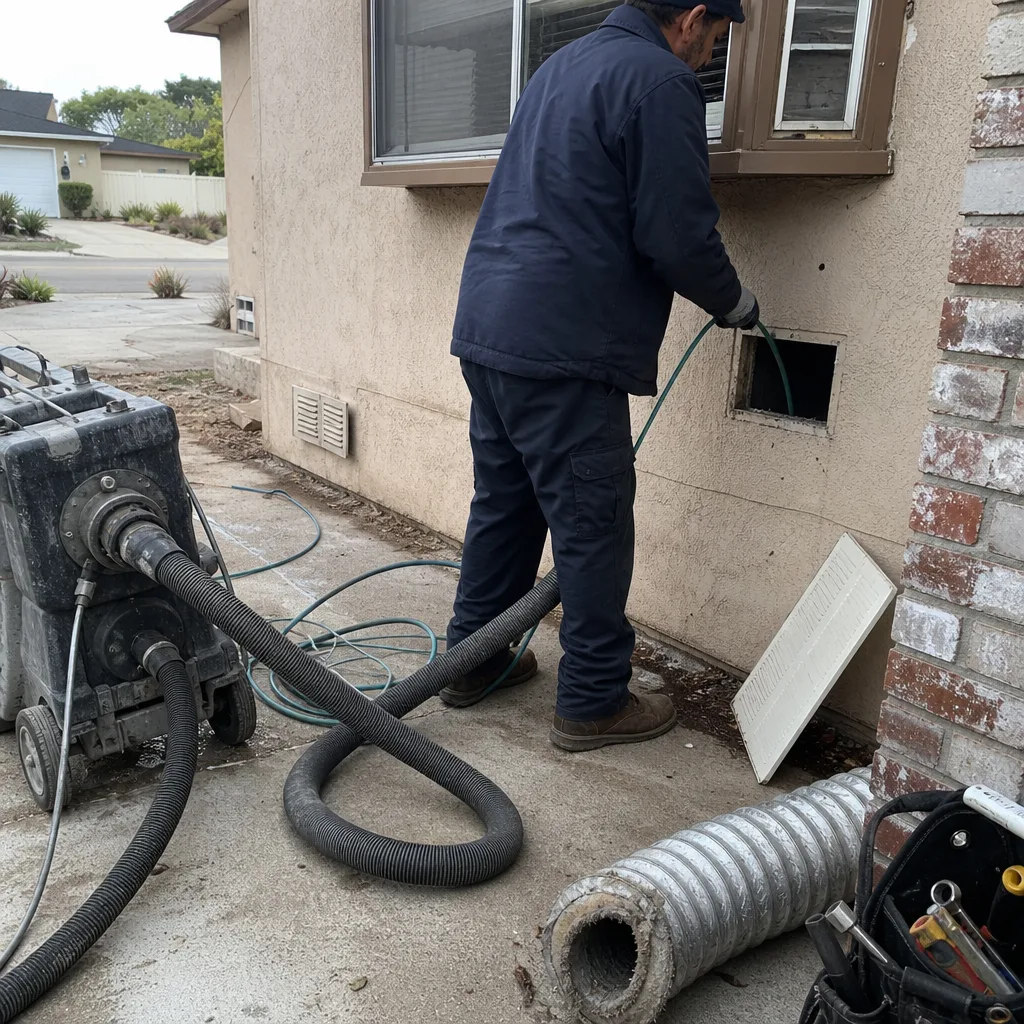
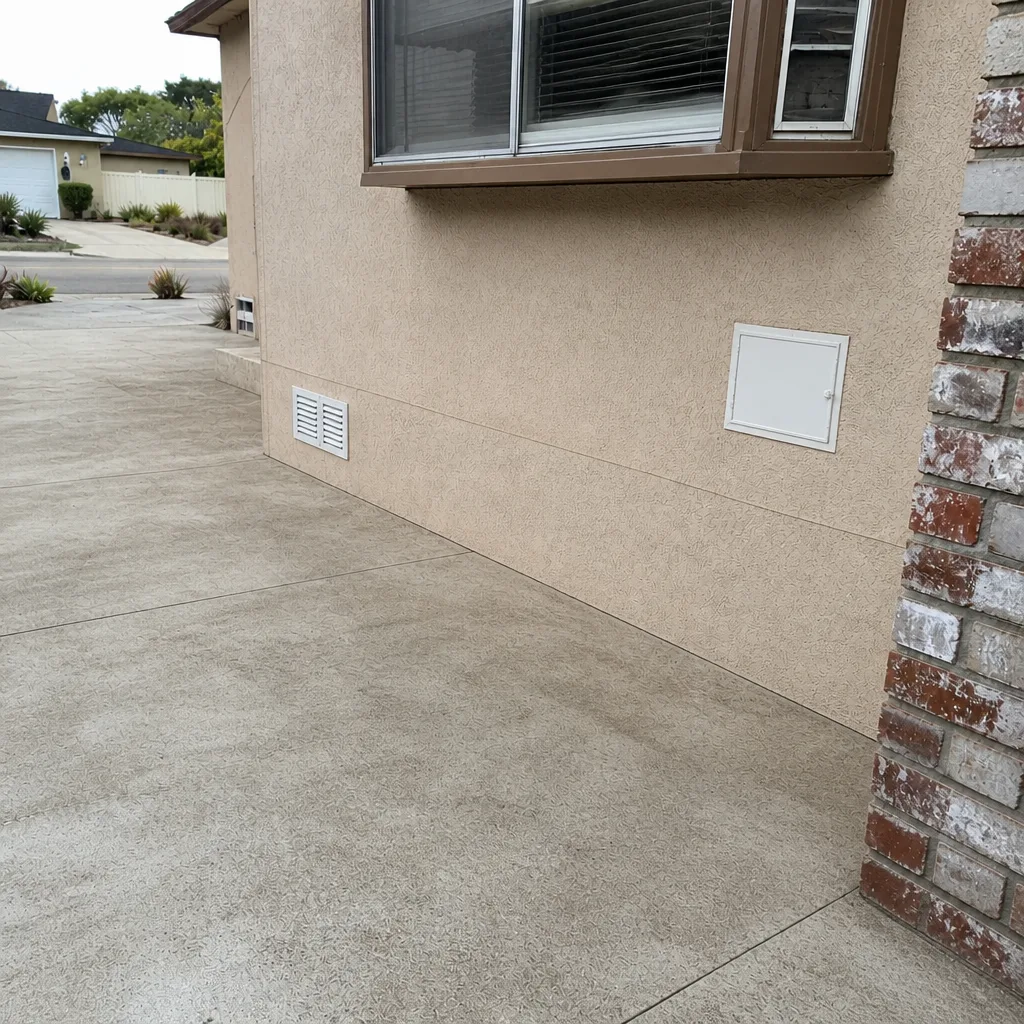
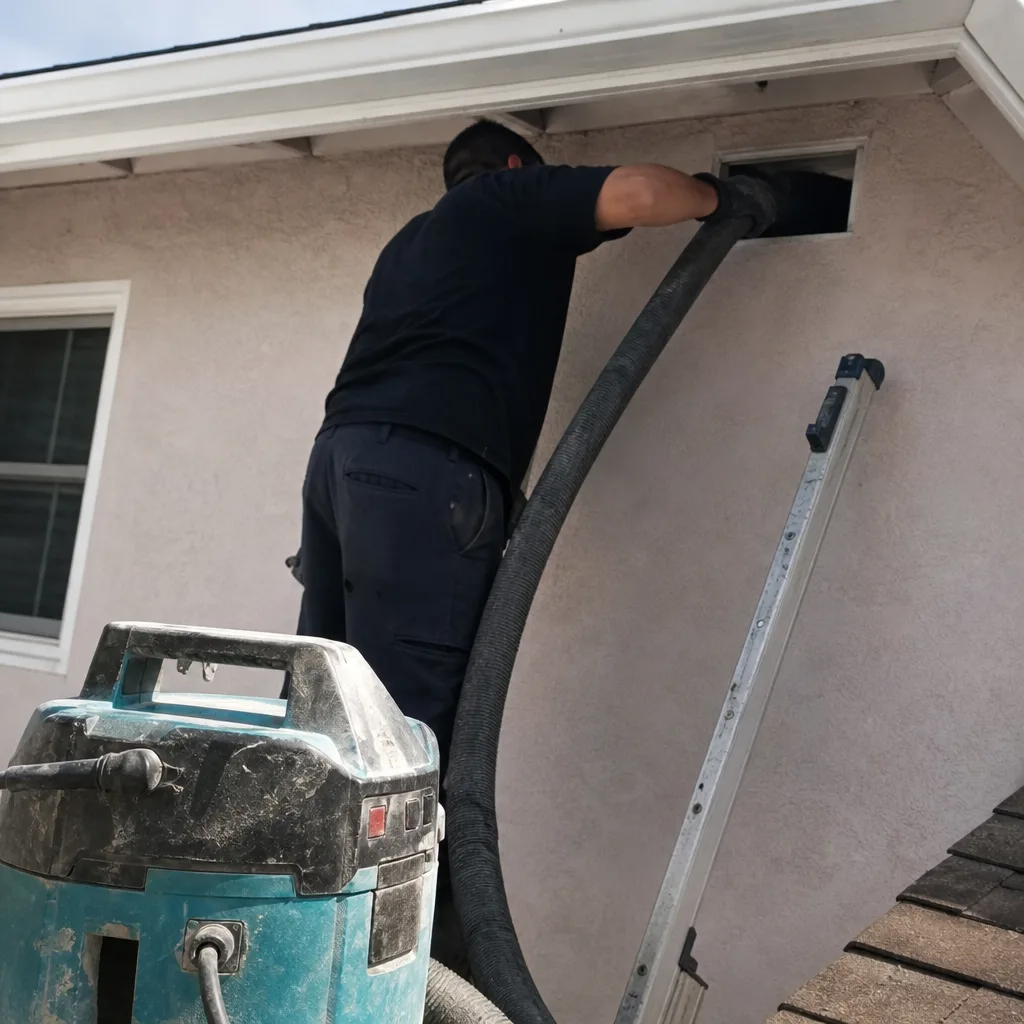
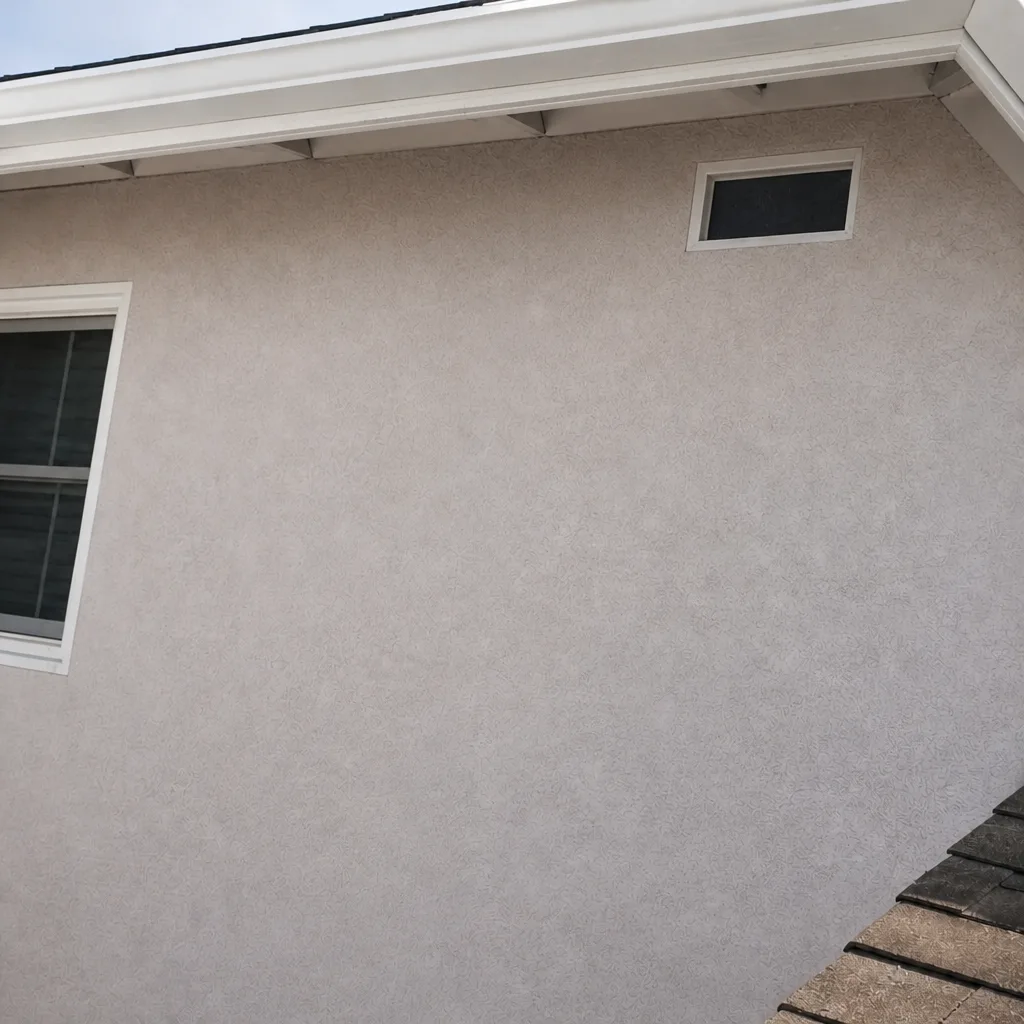
Whole-system duct and dryer vent check with before-and-after photos - you see exactly what came out of your vents
That "$99 whole-house special" is a bait ad - the real number appears once they are in your hallway, or the "clean" is a shop-vac at the register. We photograph the inside of your ducts before and after instead.
DIY vs Professional Air Duct Cleaning: The Cypress Homeowner’s Decision Guide
Most homeowners who decide to clean their ducts themselves are working from a reasonable premise: it’s a tube full of dust, so a vacuum and some elbow grease should handle it. That premise breaks down the moment you understand how debris actually behaves inside a duct run. Dust doesn’t sit in a neat pile near the register where you can reach it. It clings to the walls of the supply and return runs, collects at elbows and transitions, and settles in the plenum above the air handler. A shop vac pulling air from a single open register creates almost no velocity change inside the system, so it lifts surface dust and leaves everything else in place. This guide explains what professional cleaning actually does that consumer equipment cannot, which tasks you can legitimately handle yourself in a Cypress home, when DIY wastes a weekend and misses the real problem, and what either path actually costs over a cleaning cycle.
Styles & brands we work with
- Whole-home duct cleaning
- Dryer vent cleaning
- Camera inspection
- Sanitizing & deodorizing
Quick Answer
DIY air duct cleaning is a reasonable first step for surface dust, register grilles, filter changes and dryer vent lint, but it cannot replicate the negative pressure and mechanical agitation that professional source removal requires to extract debris from deep inside the duct runs. If you suspect mold, rodent contamination, or a system that has never been cleaned, professional cleaning with proper containment equipment is the only approach that addresses the actual problem. In most Cypress homes, a hybrid approach works best: maintain filters and registers yourself, and bring in professional equipment on a 3 to 5 year cycle.
Table of Contents
- What Negative Pressure Actually Does That a Shop Vac Cannot
- What a Capable Cypress Homeowner Can Legitimately Do Themselves
- When DIY Is a Legitimate First Step
- When DIY Wastes Time and Misses the Problem
- Mold, Rodent Contamination, and Why DIY Can Make It Worse
- The Real Cost Comparison: Equipment vs. Professional Service
- What Professional Equipment Actually Looks Like
- How to Decide for Your Cypress Home
- Common Mistakes to Avoid
- When to Call a Professional
- Frequently Asked Questions
- The Bottom Line
What Negative Pressure Actually Does That a Shop Vac Cannot
Source removal with negative pressure is the phrase you’ll see in professional equipment specs, and it’s worth unpacking because it explains the entire difference between professional and consumer results. Negative pressure means the cleaning equipment creates a pressure differential that pulls air and entrained debris toward a collection point rather than letting it drift back into the living space or redistribute through the system.
Here’s what that looks like in practice. A professional setup couples a high-volume vacuum unit to a specific duct run, seals off the other openings, and then uses mechanical agitation (compressed air whips, rotary brushes, or cable-driven tools) to dislodge debris from the duct walls while the vacuum extracts it. The negative pressure is what keeps the dislodged material moving in one direction: out of the system, into the HEPA-filtered collection unit, and not into your bedroom.
A consumer shop vac creates the opposite situation. It pulls air from wherever it can, which means from the closest return, from around the register you’ve opened, and from any leak in the duct system. The static pressure inside the ducts barely changes. Debris that you dislodge with a brush either stays in the run, falls back into the plenum, or drifts out through leaks in the return side. You’ve moved dust around. You haven’t removed it.
The second function is containment. Professional equipment from Abatement Technologies, for example, is built around keeping particulate out of the occupied space during cleaning, which matters most in homes where someone has asthma, allergies, or a newly diagnosed respiratory condition. A shop vac has no meaningful containment. Its exhaust is a fine-particle distribution system.
Third, professional agitation tools reach places a homeowner cannot. A length of flexible cable with a brush head can travel from a register to a main trunk line and around an elbow, which means the entire length of the run gets agitated and pulled. A shop vac hose cannot follow that path.
If you want a clearer picture of what full source removal involves in a typical Cypress home, our air duct cleaning page walks through the process step by step.
What a Capable Cypress Homeowner Can Legitimately Do Themselves
There’s a meaningful list of maintenance tasks that don’t require professional equipment and that do produce real results. Handled consistently, these tasks reduce the load on the system and extend the interval between professional cleanings.
- Register and grille cleaning. Remove the supply and return grilles, wash them in a utility sink or outside with a hose, and let them dry fully before reinstalling. This is genuinely useful because the grille face and the first few inches of duct behind it collect the most visible dust.
- Filter maintenance. Replace or clean the HVAC filter on the schedule the manufacturer specifies, or more often during high-pollen and high-usage periods. A clogged filter is the single most common cause of poor indoor air quality in Cypress homes.
- Dryer vent lint removal. The lint trap should be emptied after every load, and the vent run should be checked periodically for accumulation. This is a fire-safety task, not just a performance one. If the run is long, kinked, or routed through the roof, professional dryer vent cleaning is worth scheduling.
- Visual inspection. Remove a few register covers and look inside with a flashlight. You can legitimately assess whether the duct interior looks dusty, damp, or discolored, and whether there’s visible debris, pest activity, or debris accumulation at the plenum.
- Surface cleaning around the air handler. Dust and debris around the equipment enclosure ends up back in the return. Wiping down the closet or platform area helps.
- Duct sealing at exposed joints. Where accessible duct joints in an attic or crawl space are separated or visibly leaking, mastic or foil tape applied to exposed joints can improve system performance.
None of these tasks involve working inside the duct runs or dealing with contaminated material, and none require specialized equipment. They’re the right kind of homework.
When DIY Is a Legitimate First Step
There are specific scenarios where the DIY approach covers the problem and there’s no reason to bring in professional equipment yet. New construction dust is the clearest example. A newly built Cypress home or a recent renovation generates a predictable load of drywall dust, sawdust, and construction particulate that settles into the supply ducts in the first months after the work wraps. The particle sizes are often larger, the contamination is not biological, and a homeowner who changes filters aggressively, cleans the registers, and keeps the return grille clean during the finishing phase keeps a real handle on the problem.
Light surface debris in a well-maintained system is another legitimate DIY case. If the ducts were professionally cleaned recently, the filter schedule is being followed, and the register faces look dusty but the duct interiors are clean when you inspect them, the maintenance tasks listed above are sufficient.
Here’s a useful test. Before you commit to a DIY cleaning effort, do the following inspection:
- Turn off the HVAC system at the thermostat.
- Remove one supply register in a central room and one return register.
- Shine a flashlight into the duct as far as the beam reaches. Note what you see: light dust film, visible debris, discoloration, moisture, or a musty smell.
- Repeat in two or three additional locations, including one low register and one ceiling register.
- Look at the return air plenum area near the air handler for accumulation.
If the answer is “light dust film, no contamination, no smell,” the system is a candidate for DIY maintenance. If any register shows visible debris, matted accumulation, discoloration, moisture, or pest evidence, that’s your signal that the system needs source removal, not surface work.
When DIY Wastes Time and Misses the Problem
The worst outcome of DIY duct cleaning isn’t that it fails to help. It’s that it produces the impression of having helped while leaving the actual contamination untouched, which delays the real fix and sometimes makes the problem worse.
These are the situations where DIY reliably wastes a weekend:
- Duct systems that have never been cleaned. Homes that changed hands without professional service, or older Cypress homes where the previous owner never addressed it, often have years of accumulated material in the return runs and main trunk. Surface cleaning cannot move it.
- Systems with visible buildup at the plenum. If the dust is matted at the point where the return meets the air handler, the contamination extends deep into the system.
- Recent water intrusion or high humidity events. Cypress homes are vulnerable to humidity spikes and occasional water intrusion from plumbing or roof leaks. Damp duct interiors create conditions that require professional assessment.
- Pet-heavy households. Pet dander and hair adhere to duct walls and interlock with the dust layer, forming a mat that brushes and shop vacs cannot break up without agitation tools.
- Post-renovation systems with fine-dust contamination. Fine drywall dust and silica particles are too small for a consumer vacuum to capture and too fine for a shop vac filter to hold.
- Homes with a documented HVAC performance problem. If rooms are consistently hot or cold, the problem is often duct leakage or a system-level issue that only a professional inspection will find.
- Any system where a mold smell is present. That smell is a signal, not a nuisance. It’s addressed below.
If your inspection turned up any of these, the next step isn’t a weekend project. It’s an inspection with proper equipment, which also covers the HVAC cleaning scope that basic duct work leaves out.
Mold, Rodent Contamination, and Why DIY Can Make It Worse
This is the section most DIY guides skip, and it’s the one that matters for safety.
If the contamination inside your duct system is biological, meaning mold, bacteria, rodent droppings or urine, or pest residues, the DIY approach is not just ineffective. It can actively aerosolize the contaminants and make the air quality in your home worse. Here’s why that happens. A shop vac or a brush disturbs the material and sends fine particles into the air. Without containment equipment and negative pressure, those particles travel into the living space. Mold spores and rodent residue particles are within the size range that reaches deep into the lungs. A homeowner who agitates a contaminated duct run without containment turns the duct system into a distribution system for exactly the contaminant they’re trying to remove.
Second, DIY work can’t treat the contamination, only move it. Mold that’s growing on the duct interior because of a moisture problem will return. Rodent contamination requires removal of the affected material, treatment of the interior surface, and sealing of the entry points. That’s a professional scope of work.
Third, mold in ductwork is a symptom as much as a problem. It usually points to a moisture issue that needs to be found and corrected. Clean ducts in a still-wet system grow mold again within months. Professional cleaning with proper inspection catches this. A shop vac does not.
If you smell a musty, earthy, or persistent unpleasant odor from your registers, or if you’ve seen pest activity in the return plenum, stop. Do not run the system and do not attempt to clean the ducts yourself. Call for professional inspection.
The Real Cost Comparison: Equipment vs. Professional Service
Let’s talk honestly about what each path costs. The DIY advocates tend to compare the cost of a shop vac and a brush kit against the cost of a single professional cleaning, which is a comparison that ignores the actual cleaning interval and the equipment’s real capabilities.
Professional air duct cleaning in Cypress is priced per system, based on the number of supply and return runs, the length of the duct system, accessibility, and any contamination issues. Whole-system cleaning for a typical single-family home in the Cypress area typically falls in a range that reflects the work involved, and the written estimate given before work begins is the final price. That’s the standard we hold to: one flat price per system, agreed before we start, no per-vent pricing games.
Here’s the honest math on amortizing that cost:
- Professional cleaning on a 3 to 5 year cycle spreads the cost across multiple years.
- On the low end of the cycle, the annual cost of professional cleaning is comparable to what a homeowner would spend on filters alone in the same period.
- DIY equipment costs are real: a shop vac, brush kit, hose extensions, filters, and PPE add up over time.
- The DIY result doesn’t replicate the professional one, so the DIY equipment cost is on top of the professional cleaning you’ll still eventually need for full source removal.
Scheduled professional cleaning also catches things a DIY effort can’t: duct leakage, separated joints, damaged flex duct, and airflow problems. Our Cypress Air Duct Cleaning Pros team handles the repair and sealing side of that scope, which most cleaning-only companies do not.
The comparison that matters is not “shop vac versus professional cleaning.” It’s “shop vac plus a professional cleaning later” versus “professional cleaning on the right cycle, with homeowner maintenance in between.” The second option usually costs less over several years and produces a better result.
What Professional Equipment Actually Looks Like
If you’ve wondered what separates a $200 home kit from a professional setup, the answer is volume, agitation capability, and containment. Professional equipment is built around those three things, and every brand we use is chosen because it delivers them.
The core of the system is a high-volume vacuum unit coupled to the duct run through a sealed connection. Rotobrush and Nikro systems are the industry standard for residential duct cleaning because they combine a push-pull air mechanism with mechanical agitation inside the run. The rotary brush and compressed-air whip travel the length of the duct, dislodge debris from the walls, and drive it toward the negative pressure side of the system.
Containment is the second component. Abatement Technologies equipment is the reference for professional particulate containment during cleaning, and it’s what allows cleaning in a home with allergy-sensitive occupants without turning the living room into a dust cloud. Guardsman protective treatments extend the cleanliness of the system after the cleaning is complete.
The third piece, and the one most DIYers overlook, is the air-quality scope beyond cleaning. If a home has a persistent air quality problem, cleaning alone addresses the dust but not the biological contamination. Air sanitizing addresses the mold, bacteria, and allergens that standard cleaning doesn’t. Honeywell and Aprilaire air-quality products are what we install when a homeowner needs filtration or humidity control as part of the solution.
If you want to understand what a professional cleaning includes and what the timeline looks like, our HVAC cleaning page covers the full-system scope.
How to Decide for Your Cypress Home
Here’s a decision framework that fits the housing stock and climate of Cypress.
Start with the inspection described above. That’s the input. Then work through the following ordered list, which is designed to point to a clear answer:
- Have the ducts ever been professionally cleaned? If no, professional source removal is the right starting point regardless of what surface cleaning can accomplish.
- Is there any sign of moisture, mold, or pest contamination? If yes, professional inspection is the next step.
- Is there a health concern in the household? Asthma, allergies, a newborn, or a recently diagnosed respiratory condition all shift the balance toward professional cleaning with proper containment.
- Is the system showing performance problems? Uneven temperatures, high static pressure, or rooms that never heat or cool correctly point to duct issues that require inspection.
- Is the last professional cleaning within the 3 to 5 year cycle? If yes, DIY maintenance between cleanings is the appropriate task.
- Was the home recently built or renovated? DIY filter and register maintenance during the finishing phase is reasonable; a professional cleaning after construction wraps is recommended.
For most Cypress homes, the pattern is straightforward: DIY maintenance between cleanings, and professional cleaning on a 3 to 5 year cycle, with professional inspection any time the system shows contamination or performance symptoms. Cypress homes that see high seasonal pollen loads, run AC for a large portion of the year, and host pets or family members with allergies tend to sit on the shorter end of that cycle.
Common Mistakes to Avoid
- Using a shop vac on a contaminated system. Shop vacs have no containment. Running one on a system with mold or rodent contamination aerosolizes the contaminants and distributes them into the living space.
- Skipping the inspection entirely. Most wasted DIY weekends start because a homeowner never looked inside the ducts before committing to a cleaning. Five minutes with a flashlight saves the whole afternoon.
- Ignoring the return air plenum. The most common DIY mistake is concentrating effort on the supply registers where dust is visible and never addressing the return side and plenum, where the bulk of contamination collects.
- Assuming “no visible dust” means “clean.” The duct interiors can be coated with a fine layer of contamination that looks clean at a glance but adds up across years. Surface dust is not a reliable signal of duct condition.
- Turning up the HVAC during a DIY cleaning. Running the system while cleaning circulates dislodged debris through the home. Turn the system off before any work begins.
- Mixing DIY register cleaning with professional duct cleaning in the same session. If you’ve scheduled professional source removal, let the equipment do the full job. Household cleaning between the professional visit and the next one is the right timing.
- Overlooking the water source when mold is present. Cleaning mold out of a duct system without correcting the moisture issue that caused it produces a recurrence, not a fix.
When to Call a Professional
Call for an inspection when you find any of the following: visible mold, rodent droppings, pest residue, or a persistent musty odor from the registers; matted or heavy contamination at the return plenum or main trunk; a system that has never been professionally cleaned; a health concern in the household; or a system showing performance symptoms like uneven temperatures or high static pressure. Also call when inspection turns up damaged, separated, or leaking ductwork, because duct sealing and repair are part of what a full-service provider does and cleaning-only companies leave behind. Cypress Air Duct Cleaning Pros offers free estimates in Cypress. Call (833) 698-8235. We answer 24/7. Fast dispatch from 7am to 7pm, Sunday through Friday. Our technicians have up to 12 years of experience with professional-grade Rotobrush and Nikro systems, Abatement Technologies containment equipment, and duct sealing capability that a surface cleaning approach simply cannot match.
Frequently Asked Questions
A capable DIY setup with a shop vac, brush kit, hose extensions, and PPE typically runs a few hundred dollars when you source everything new. That’s the real cost to get to a starting point, and it still can’t produce the negative pressure or containment that professional source removal requires. A written estimate from a professional service is free, so the smart comparison is to get one before you buy equipment. Call (833) 698-8235 for an exact quote. Estimates are free.
You can clean the register grilles, the first few inches of duct behind them, and the accessible surface area with a shop vac, and that’s about the realistic limit. A shop vac cannot pull debris from deep inside the duct runs because it can’t create the velocity change or negative pressure that source removal requires. If the system has never been professionally cleaned, DIY surface cleaning is a partial task, not a solution.
Visible mold, rodent droppings or urine, pest residues, a persistent musty smell from the registers, matted contamination at the return plenum, or a household member with asthma or a respiratory condition all mean the right next step is professional inspection, not a DIY effort. Cleaning a biologically contaminated system without proper containment can aerosolize the contaminants and make indoor air quality worse.
For most Cypress homes, a 3 to 5 year professional cleaning cycle is reasonable, with homeowner filter and register maintenance in between. Homes with pets, allergy-sensitive occupants, recent renovations, or high seasonal pollen loads tend to be on the shorter end of that cycle. If you’re unsure where your home sits, an inspection will tell you more than a guess.
Low quotes are usually per-vent teaser pricing that becomes a much larger invoice once the technician is on site, or they’re missing the containment, agitation, and inspection steps that make cleaning effective. We hold to the opposite standard: one flat price per system, agreed before work starts, with no per-vent pricing and before-and-after photos of the work. Any quote you get should be a written whole-system estimate. Call (833) 698-8235 for a free written estimate.
Ask for before-and-after photos of your own ducts, not stock images. A professional cleaning includes an inspection report of what was found and what was cleaned, and the equipment process leaves visible evidence that interior surfaces were agitated and extracted. If a company can’t show you photos of your specific system when the work is done, that’s a signal.
The Bottom Line
The DIY versus professional air duct cleaning question is not really about cost or effort. It’s about whether the contamination in your specific system can be addressed without negative pressure equipment. For surface dust, dryer vent lint, and filter maintenance, DIY is a reasonable first step. For systems that have never been cleaned, systems with mold or rodent contamination, and any home where indoor air quality is a health concern, professional source removal with containment equipment is the only approach that addresses the actual problem. Most Cypress homeowners land on a hybrid routine: maintain filters and registers yourself, and schedule professional cleaning on a 3 to 5 year cycle. If you’re ready for a professional assessment, Cypress Air Duct Cleaning Pros offers free estimates in Cypress. Call (833) 698-8235 for a free estimate. We answer 24/7. Fast dispatch from 7am to 7pm, Sunday through Friday.
Written by the team at Cypress Air Duct Cleaning Pros.
See the difference
 Before
 After
 Before
 After
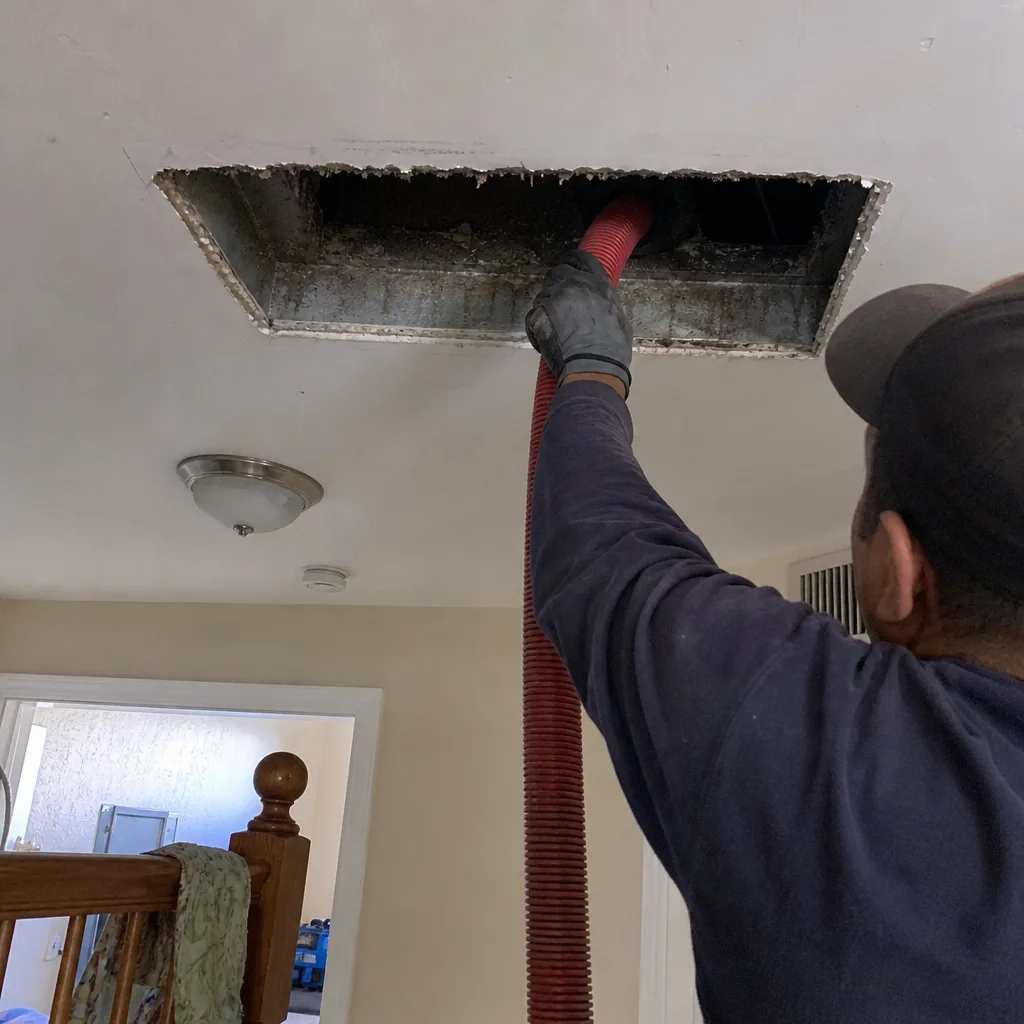 Before
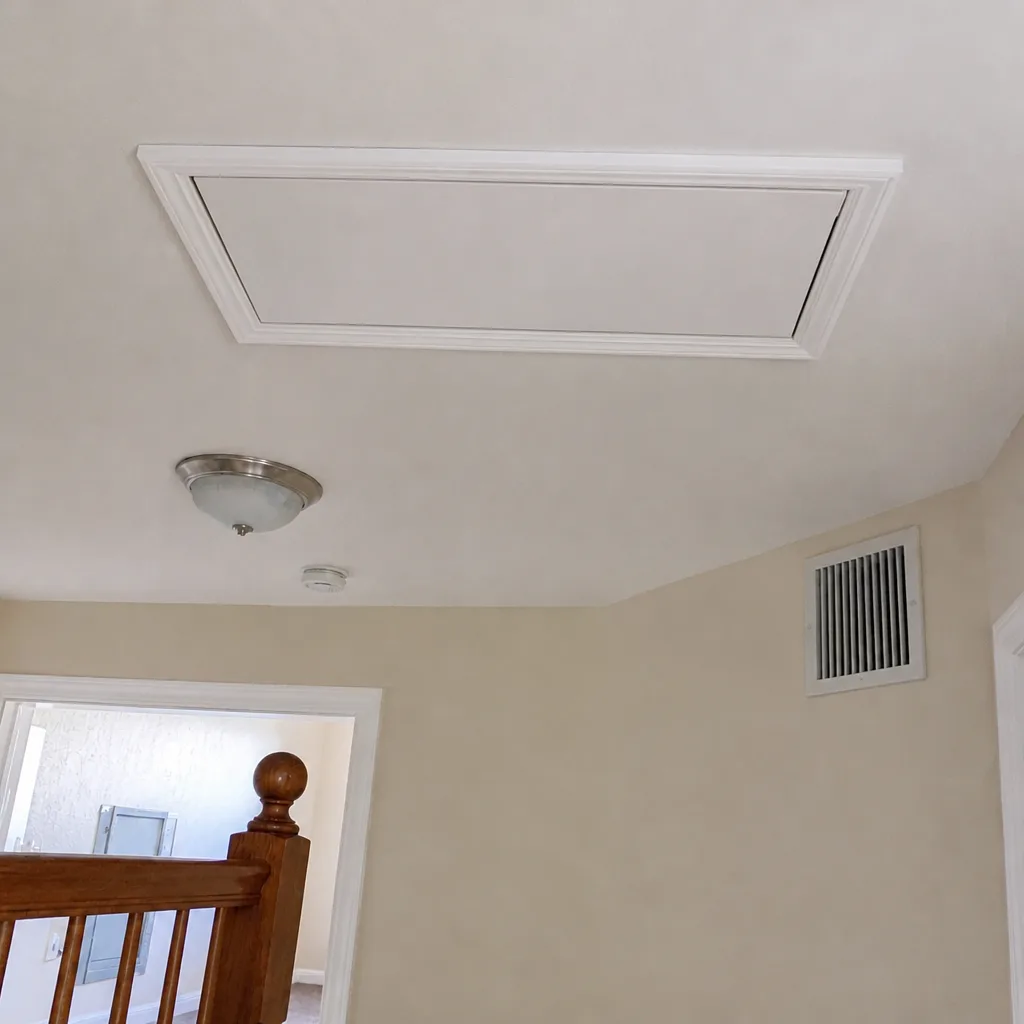 After